
How to Appreciate and Photograph Post-Peak Fall Foliage
Nothing lasts forever, and peak fall color is no exception. Every year it seems that just as quickly as the dog days of summer transition to crisp and foggy fall mornings, the once vibrant hues of autumn fade and the trees are left solemnly standing bare, ready to face another long and cold winter. Fall color can be as unpredictable as it is fleeting, and even when planning months in advance and booking that perfect campsite or cabin during what is supposed to be peak color, oftentimes autumn throws us a curveball and decides to peak early. While it’s difficult to not feel at least a twinge of sadness when fall has passed its peak, there fortunately are still a bounty of picturesque wonders to be found in the late-autumn forest.
Fallen leaves can be just as colorful and pretty on the ground as they were on the branches from which they came, especially after a strong wind has blown them from the trees before their color begins to dull. Additionally, different types of trees tend to lose their leaves at different times, and strolling down a trail littered with fallen maple leaves while the beeches and oaks still retain their auburn leaves is a joy to the senses.
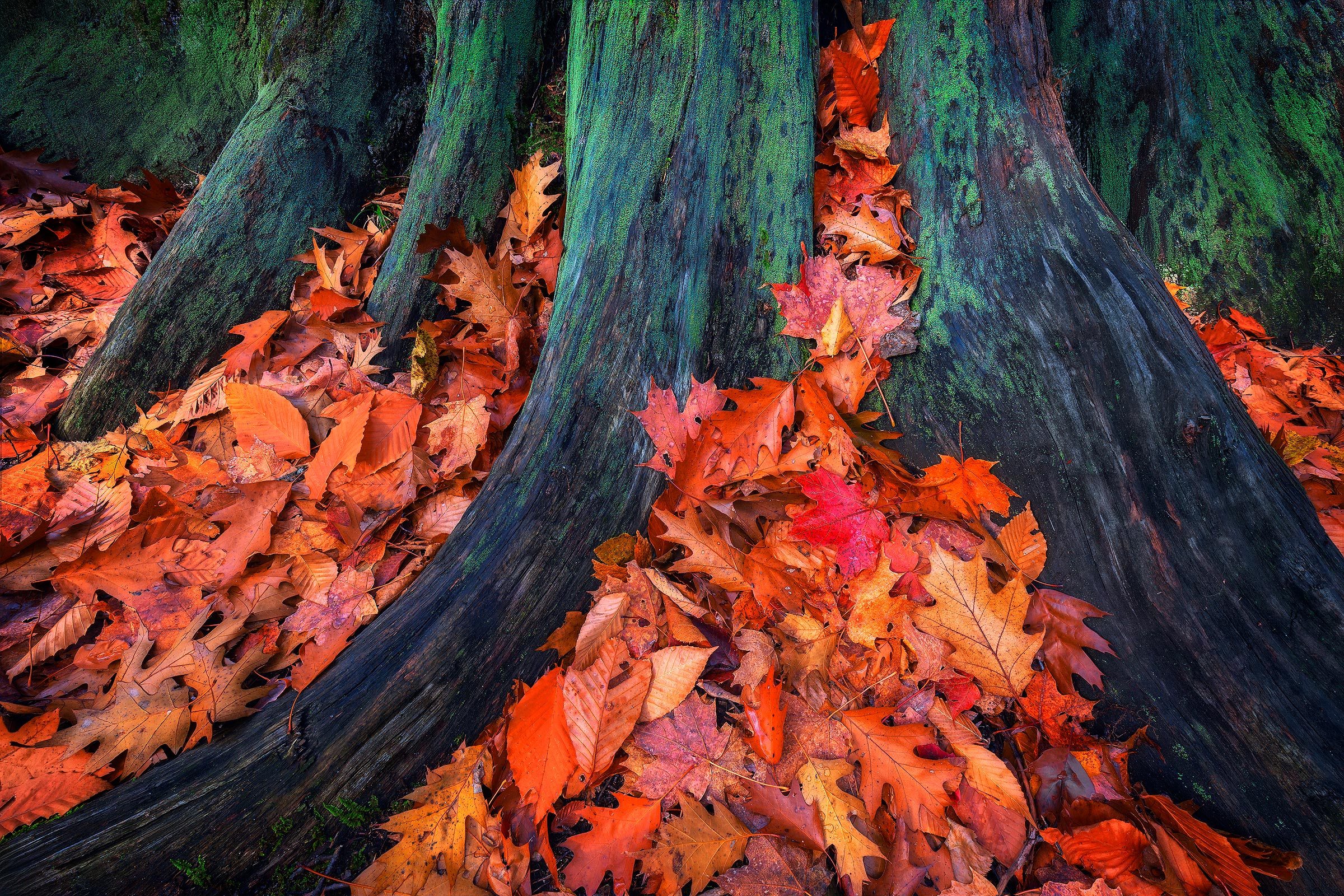
Fallen leaves collect among the roots of a tree in New York's Adirondack Mountains, where they will slowly decay and give life back to the very tree that once gave themselves life.
Leaves covered in dew or raindrops are a particularly interesting late-autumn photography subject, and can make for truly unique images that stand out from the crowd. This is a great time to utilize a macro or telephoto lens to create frame-filling shots of a collection of fallen leaves, or to isolate just a section of a single leaf to reveal an incredibly intricate world of textures and shapes that often go unnoticed. A tripod is useful for these types of shots, especially when the objective is to have sharpness throughout the photo and focus stacking (taking different shots at various focal points, then blending them together in post-production) is employed. In case mother nature doesn’t cooperate, stashing a small spray bottle of water in your pack to use to add water droplets to fallen leaves can come in handy.

An abstract view of rain droplets on a fallen autumn leaf in the Adirondack Mountains.
Another way to appreciate fallen leaves and use them for creative photos is to seek out eddies in creeks or small rivers where fallen leaves have gathered. These nooks in the shore often cause the water to slowly move in a swirling circular motion that’s difficult to perceive with the naked eye but can be revealed in a photo by using a multi-second exposure. Depending on how bright it is out, a neutral density filter, which reduces the amount of light that reaches the camera sensor, may be necessary to facilitate an exposure that’s long enough to capture a pleasing swirling motion. A circular polarizer also comes in handy to reduce light and glare, especially on wet leaves and rocks to accentuate their color. This type of photography is fun and dynamic, as no two photos are the same, and experimenting with different shutter speeds and tossing different collections of fallen leaves into the water can drastically alter the outcome.
In addition to photographing swirling leaves, static fallen leaves resting on rocks along or in the middle of a creek or river can add a special touch to late-autumn photos.
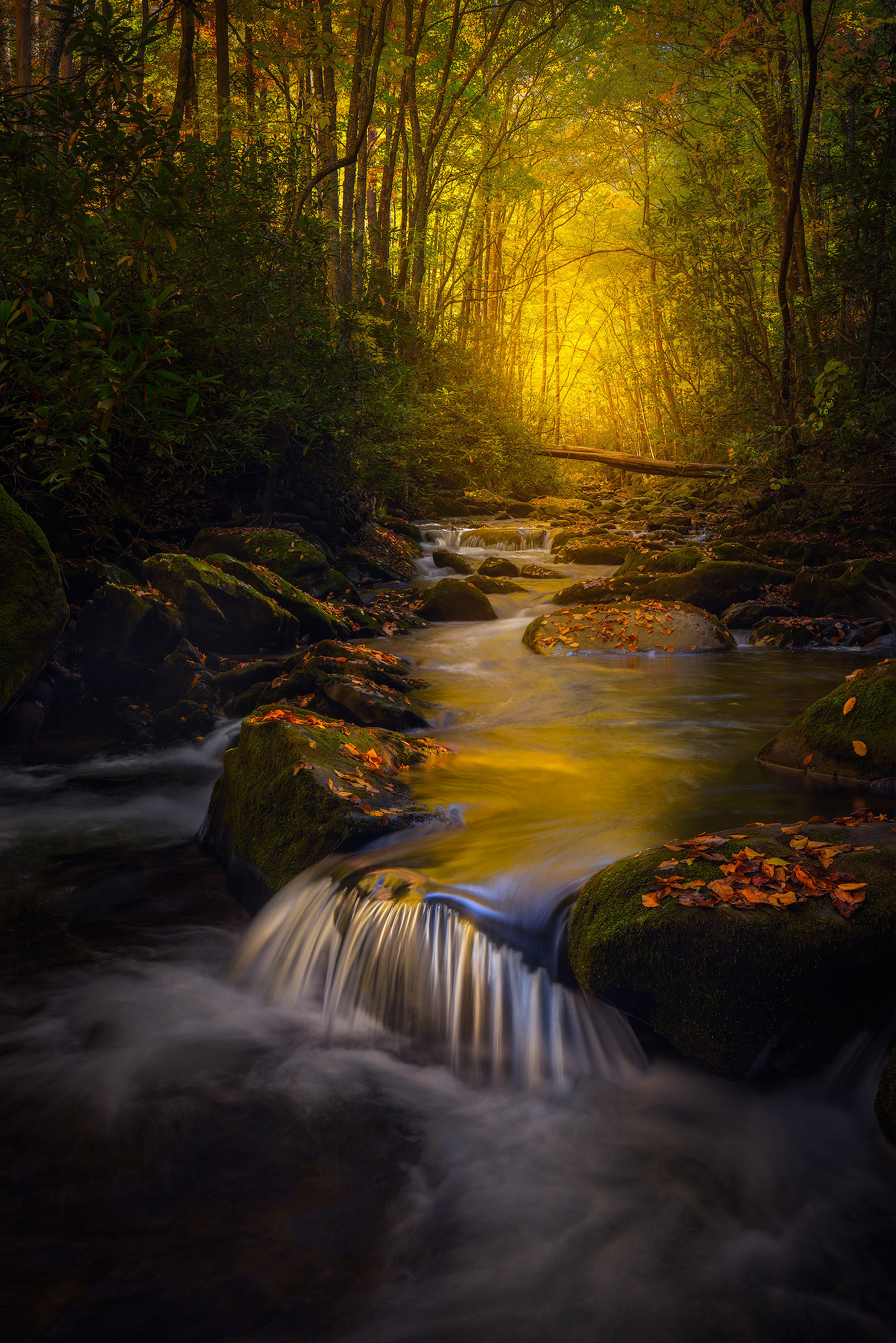
Warm morning light filters through the autumn forest and reflects on a cascading creek in Great Smoky Mountains National Park.
Bare trees that have entered ‘stick season’ and bid adieu to their leaves until the spring also make for an intriguing photography subject. These trees are interesting in their own right as a standalone subject when isolated from the grand landscape with a telephoto lens, especially when a thick veil of morning fog obscures the background and simplifies the landscape. Mountainsides with some trees that still have colorful leaves and others that are bare make for a thought-provoking contrast in color and form, and on a deeper level can make one think about the fragility and ephemerality of life.

Two small islands appear through thick fog and reflect in a still lake on a late-fall morning. Even after the colorful leaves of autumn drop and fade, there's still much beauty to be seen and photographed in the wilderness.
Just because the majority of leaves have fallen and autumn is well past its peak, it doesn’t mean that there isn’t still beauty to be found in the fall forest. So the next time you look at a foliage report and see that the colors are past peak, don’t hesitate to still get out and discover the splendor that the late-autumn season has to offer - likely in much more solitude than during peak color!